

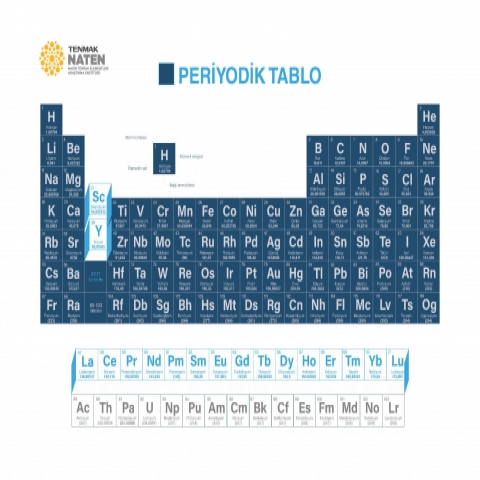
Rare earth elements comprise the lanthanide group, consisting of elements with atomic numbers 57-71 on the periodic table: lanthanum, cerium, praseodymium, neodymium, promethium, samarium, europium, gadolinium, terbium, dysprosium, holmium, erbium, thulium, ytterbium, and lutetium. They also include scandium (number 21) and yttrium (number 39), which share similar chemical properties and are often found together in nature.
REEs, relatively abundant in the Earth's crust, are often found as oxides, making them difficult to categorize. They are called "rare earth elements" because reducing oxides to metals is difficult and rare.
These elements, which are lustrous, iron-gray, and silvery in color, have unique magnetic and optical properties. They are divided into two categories: light and heavy. Almost all heavy elements are produced in China, creating a monopoly. China's unrivaled position in trade wars stems not only from its reserves, but also from the technology required to produce these minerals. Low-cost energy and environmentally friendly production are crucial for the processing of rare earth elements.
Rare earth elements are an integral part of modern life due to their unique physical, magnetic, and chemical properties.
These elements are key to the production of magnets, which maintain their magnetic properties indefinitely without the need for external energy. They are among the essential components of many high-tech products, such as smartphones, laptops, hybrid cars, wind turbines, and solar panels.
They are also crucial in the defense industry. They are used, for example, in jet engines, missile guidance systems, missile defense mechanisms, space-based satellites, and communication systems.
- Log in to post comments